


For decades, life at sea has meant isolation. Fishers on industrial vessels often spend months or years away from home, working under demanding conditions with limited connectivity and visibility. But a quiet revolution is underway. Thanks to rapid improvements in Wi-Fi technologies, the rise of affordable Low Earth Orbit (LEO) satellite connectivity, and growing recognition that fishing crews deserve regular access to communication, vessels can operate differently — and more humanely.
Why Connectivity at Sea is Tangible, Now More Than Ever
Four major drivers are reshaping connectivity at sea:
-
- Wi-Fi technologies are now more powerful and affordable, making vessel‑level networks realistic even for smaller operators.
- LEO satellite services provide high-speed coverage in remote waters, delivering stable bandwidth at a fraction of the cost of traditional Geostationary Earth Orbit (GEO) systems.
- Improved connectivity enables near real-time, vessel-level data collection via Electronic Monitoring (EM) and digital reporting, boosting operational efficiency, transparency, and safety across fleets while improving fisheries management globally.
- An increasing number of vessel owners recognize the trend toward onboard connectivity, and satellite connectivity is seen as the future of maritime operations.
What We’ve Achieved So Far
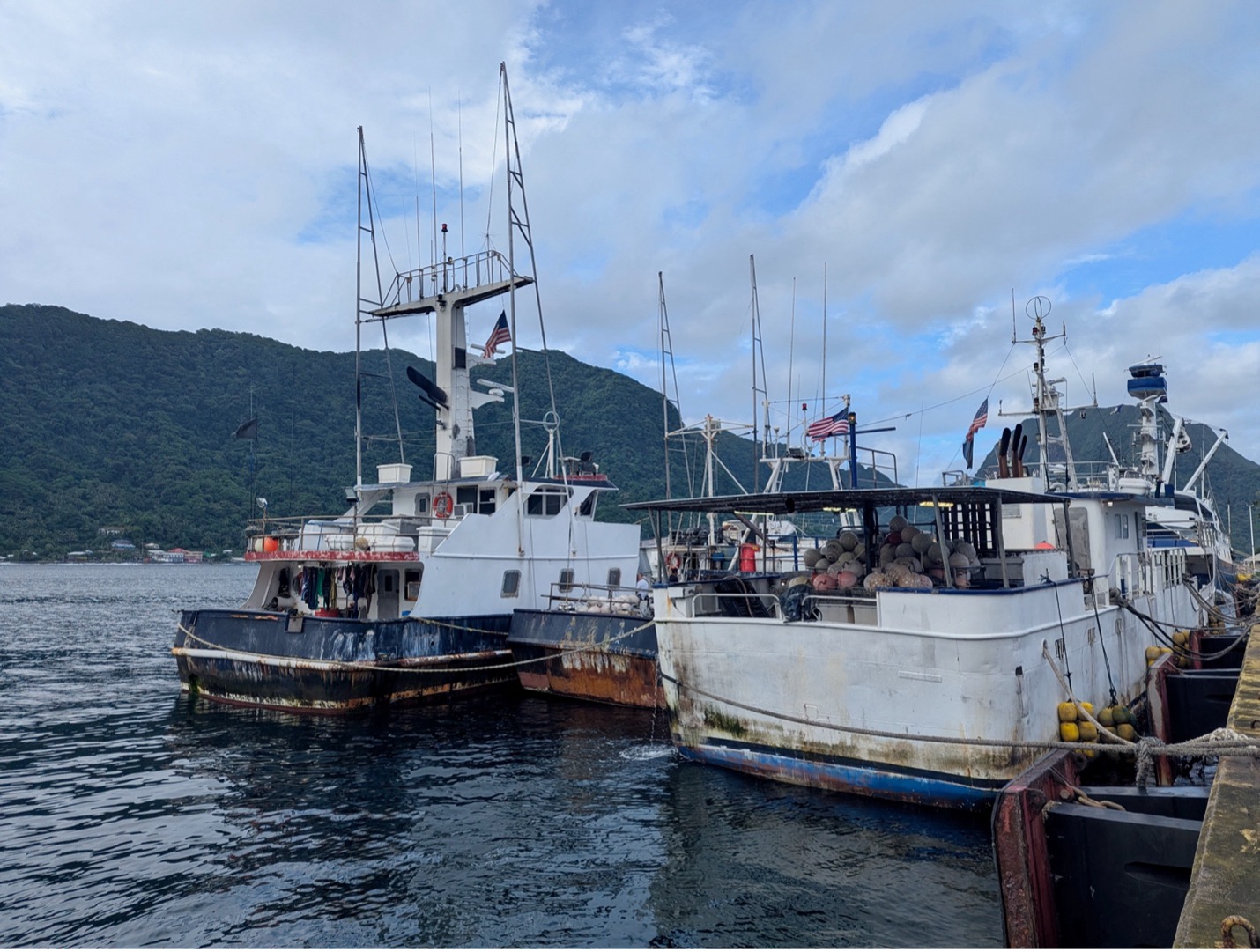
Our team, working hand in hand with vessel owners, captains, crews and global technology providers and implementers, have conducted detailed site assessments and installation designs for each vessel, ensuring each ship’s layout, crew size, and operational patterns are reflected in the configuration of the Wi-Fi network on board. To date, the Electronic Monitoring and Connectivity for Crew (EMC4C) project has installed connectivity systems on 10 tuna longline and purse seine vessels, each with its own story and challenges. Crew Wi-Fi access agreements have established the clear rules that balance personal data use with operational needs, and subsequent, onsite training has been shared with 163 crew members, 10 captains, and 10 officers on Wi-Fi safety, responsible use, and ways to save data. Interpreters have been embedded with our team during site visits, ensuring accessible training and materials for crew to learn in their own language. For each installation, our team has assigned individual UserIDs and passwords for each crew member, giving them much needed privacy and security, and the ability to oversee and manage their own data. This Wi-Fi management structure enables verification of continued crew access – a critical feature to enable scaling of this work and guarantee access remains uninhibited for crew.
Additionally, our team set up WhatsApp groups for the crew committee on each vessel — a simple structure that dramatically improves communication, crew engagement, and trust onboard. Crew nominates two members per vessel to the crew committee to engage with the project team and help fellow crew with tech troubleshooting and grievance escalation. Crew committees have enabled dialogue with the project team, allowing real-time feedback to diagnose network issues, report crew changes, and support training for new crew.
Stories That Show What Connectivity Really Means
Connectivity at Sea: Real Stories, Real Impact
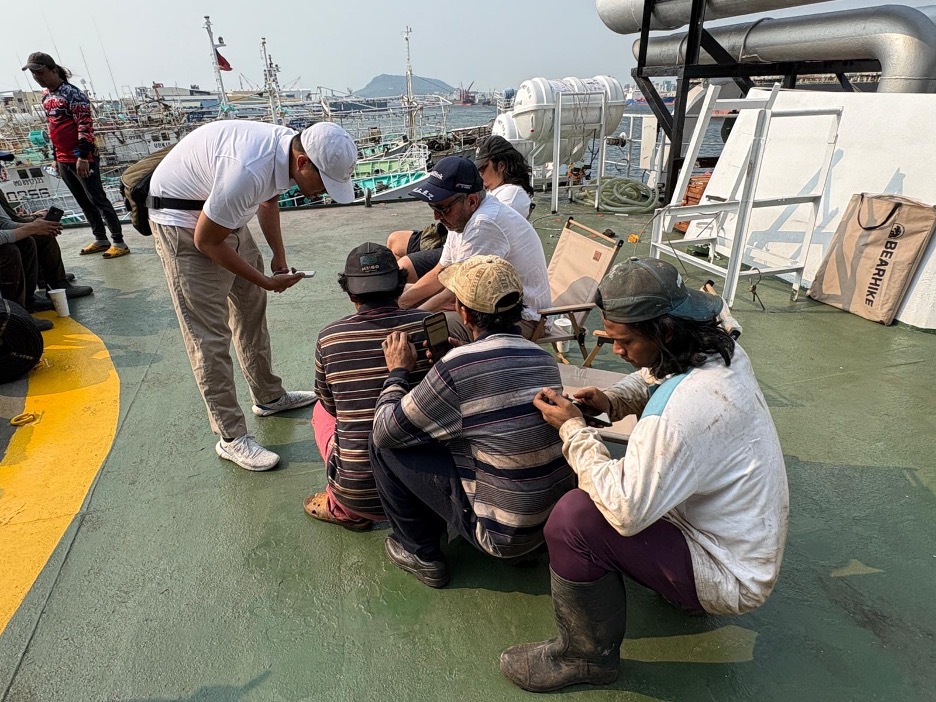
Every new installation brings moments that remind us why this work matters. For many crew members, connectivity is far more than a technical upgrade, it is a lifeline that restores dignity, autonomy, and human connection during months spent far from home.
Crew now use their limited online time to speak with family members they haven’t seen in months, to schedule medical appointments for upcoming port calls, and to learn practical habits that reduce data usage and strengthen their digital security. These small but meaningful actions were simply impossible before.
In a testament of just how critical connectivity is, our team saw that one crew member was able to livestream the birth of his child thousands of miles away, witnessing a life event he otherwise would have missed entirely. Furthermore, after a serious vessel accident, the crew accessed mental health support immediately, a level of care that would have been unimaginable just a few years ago. These stories are no longer rare — they are becoming the norm.
What Early Findings Show
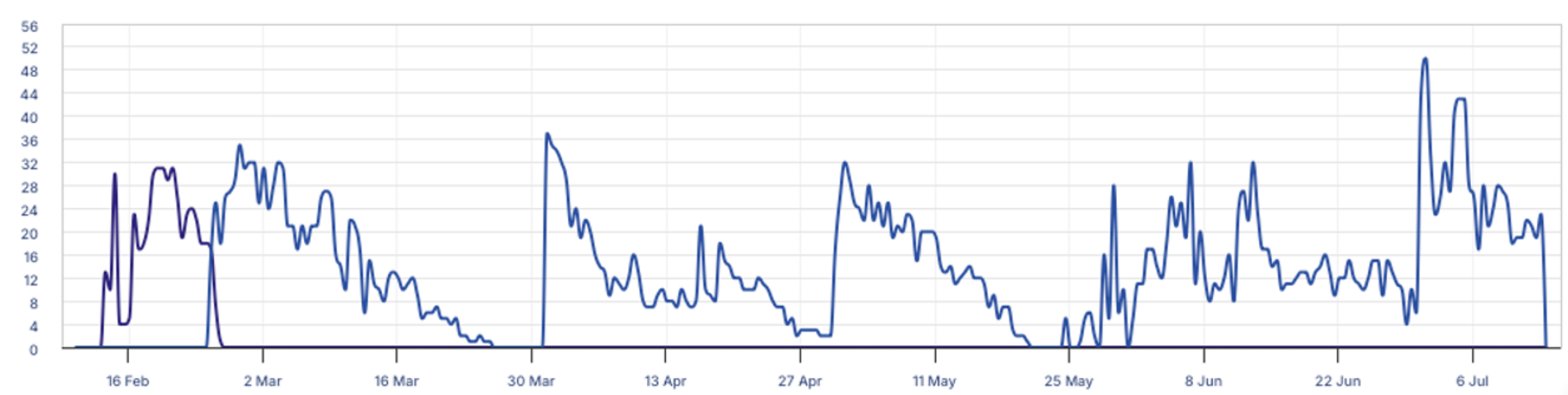
As connectivity becomes part of daily life onboard, usage patterns are emerging. Greater than 95% of crew members exhaust their monthly data allocation within the first three weeks of the month. Usage peaks early in the month, and again during predictable downtime such as after fishing operation shifts (Graph 1). Social media dominates bandwidth consumption across all vessels, while messaging and business apps show steady, moderate use. Also, device settings matter, with some users needing to adjust automatic updates to avoid draining their monthly quota. Service reliability is strong, with no significant data downtimes reported.
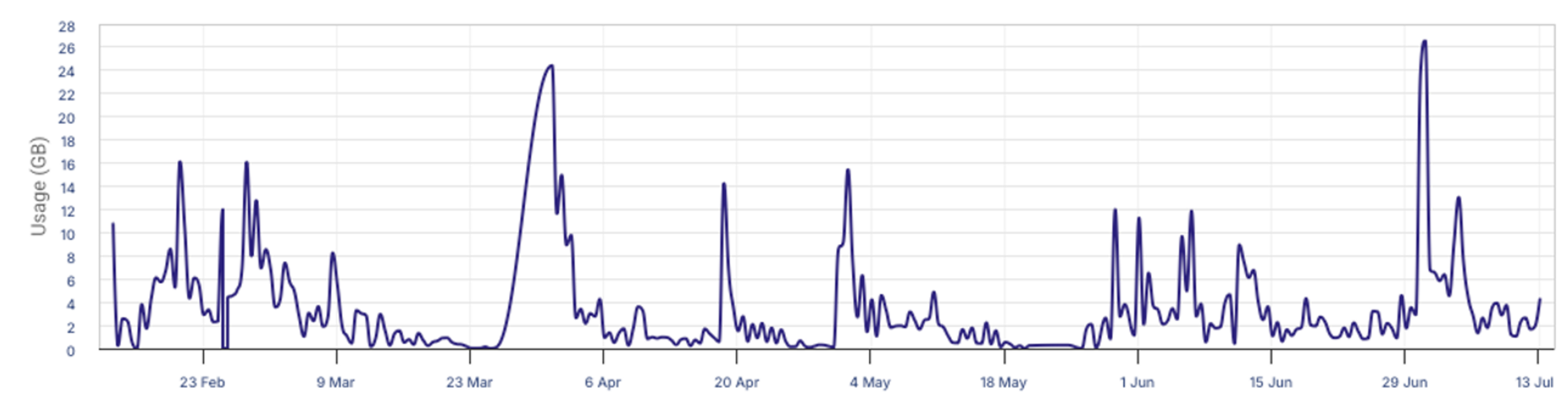
Another finding revolves around data saving habits. While crew are using most of their data in the first few weeks, they often save a small amount through the rest of the month. This leads to a small increase in usage before their monthly data reset. This data saving behavior could be responsible for the slight uptick in low-level consistent usage throughout the months of June and July that we see in our data usage figure (Graph 2).
Safeguards That Protect Crew and Operations
To ensure connectivity strengthens rather than disrupts vessel operations, each installation includes a set of safeguards based on local context and fit for purpose. For example, access can be limited to one hour after fishing ends, balancing welfare with operational focus. Dedicated data quotas are assigned for EM, observers, training, and guest users. Each crew user receives a fixed monthly data allocation, helping determine what future data plans should look like as usage patterns evolve.
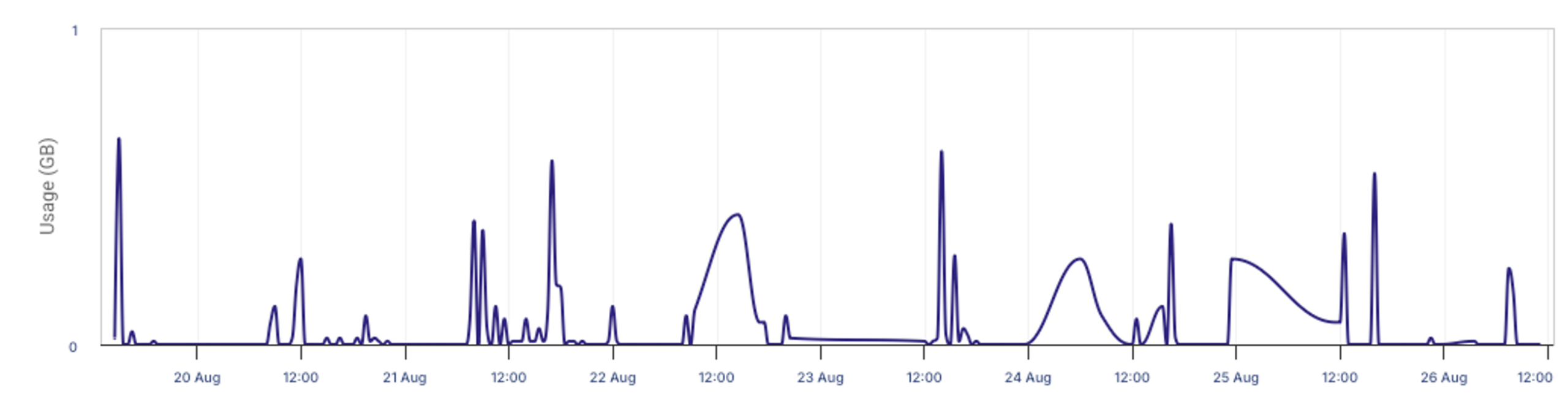
We also adjusted the data refresh time for two vessels fishing near American Samoa to match the agreed upon midafternoon (1:00-4:00 PM) timeframe, and as Graph 3 shows, the Indonesian crew used the agreed upon timeframe to call home without disrupting vessel operations. After connecting with the crew committee, and confirming a change to data refresh cadence, they reported satisfaction with the new regime.
When asked if the daily allotment change was going well, a member of the crew committee responded, “Yes, the daily reset is a big hit! It gives everyone a fresh start every day and keeps the crew happy.” We then asked if the Wi-Fi had improved daily life on the vessel. They said, “It brings us closer to home. Being able to message and call our loved ones makes life at sea so much brighter.”
A More Connected Future for Life at Sea
Connectivity is no longer just a technical upgrade. It is a lifeline — for safety, for dignity, for transparency, and for human connection. As Wi-Fi and satellite technologies continue to improve, and as vessel owners increasingly recognize the value of connectivity for the captains and crews, the fishing industry is entering a new, more connected and transparent era.
The ocean will always be vast. But thanks to these efforts, it will no longer feel so far from home.
Related reading on EM4Fish
- Technology Meets Labor Rights in Global Fisheries — Read the background to the EM4Humanity project and its approach to crew welfare, electronic monitoring and Wi-Fi.
This story is part of our ongoing EM4Humanity series. Will Kammin is the Manager of Fisheries Technology at Conservation International, where he works to use technology to support sustainable distant-water fisheries, strengthen conservation, and improve worker well-being. Travis Heneveld is an independent consultant focused on connectivity, digital transformation and multi-stakeholder challenges.