
Integrated Monitoring, A.I.S., Inc., and UMass Dartmouth’s School for Marine Science & Technology (SMAST) have released the Open Groundfish Image Library, a public resource for developing and evaluating computer-vision tools for fisheries electronic monitoring (EM). Developed with funding from the National Fish and Wildlife Foundation and MIT Sea Grant, the library brings together annotated images collected aboard commercial New England fishing vessels.
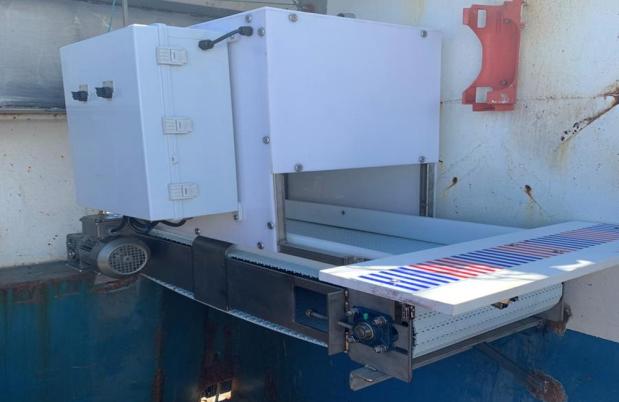
Intelligent Discard Conveyor photographed on a large scale commercial groundfish vessel. The stable camera geometry, consistent lighting and background are key to high-quality images. A known measurement reference and practical handling protocols provided the basis to validate AI-derived lengths and species ID.
Researchers, EM providers, fisheries agencies, and students can explore the collection through an interactive browser-based viewer or download images and annotations in bulk. The library contains 65,839 images from 9,180 capture events across 14 taxonomic categories. The collection includes species-level labels as well as grouped categories; multiple frames can show the same fish.
Real fishing conditions, shared for research
Turning vessel imagery into reliable catch information requires examples that reflect how fish actually appear during fishing operations. Lighting, orientation, handling, and camera geometry all affect what an AI model—and an EM reviewer—can see. This library makes commercial-vessel imagery available alongside annotations that researchers can inspect and use to develop their own methods.
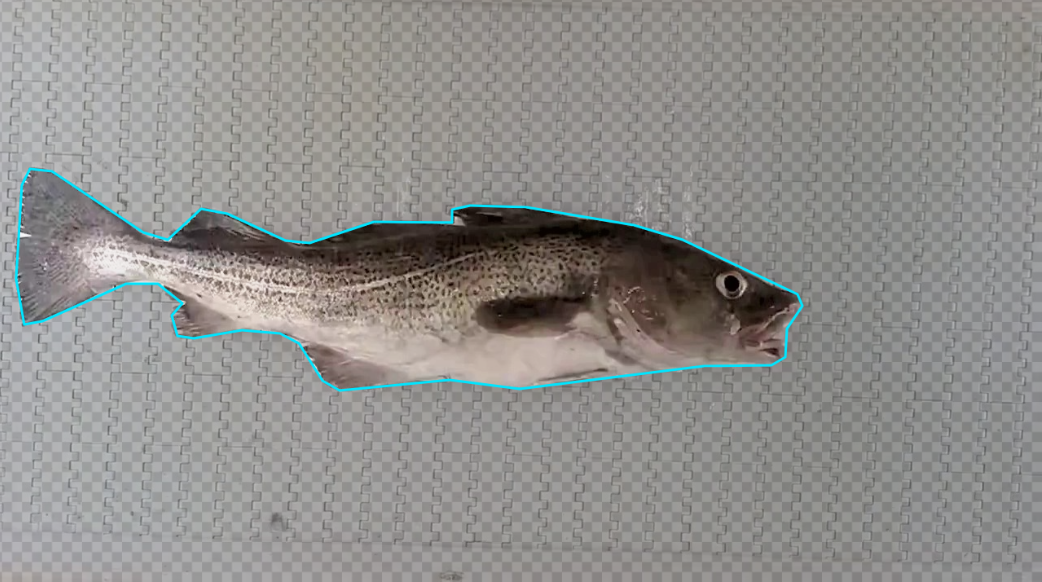
Atlantic cod photographed on a commercial-vessel conveyor. The library makes real fishing imagery available for detection, identification, and measurement research. Credit: Open Groundfish Image Library / IM, A.I.S., Inc., and UMass Dartmouth/SMAST.
Images are organized by ITIS taxonomic code and capture event. Downloadable material includes JPEG images and YOLO-format bounding boxes, with segmentation outlines and anatomical keypoints available for subsets of the collection. Event-level camera-calibration files and annotation definitions provide additional context for interpreting the images.
Making similar-looking fish easier to identify
A central focus of the project has been distinguishing similar flatfish, including witch flounder, yellowtail flounder, American plaice, and sand dabs. Anatomical keypoints identify features such as the snout, fins, and tail, allowing researchers to investigate body proportions and shape in addition to color and texture. The viewer lets users inspect these landmarks alongside fish outlines and the original imagery.
The site also includes experimental browser-based tools for generating outlines, marking keypoints, measuring characteristic distances, and predicting species. These predictions are distinguished from the downloadable dataset annotations. Their purpose is to make methods accessible for exploration and testing.
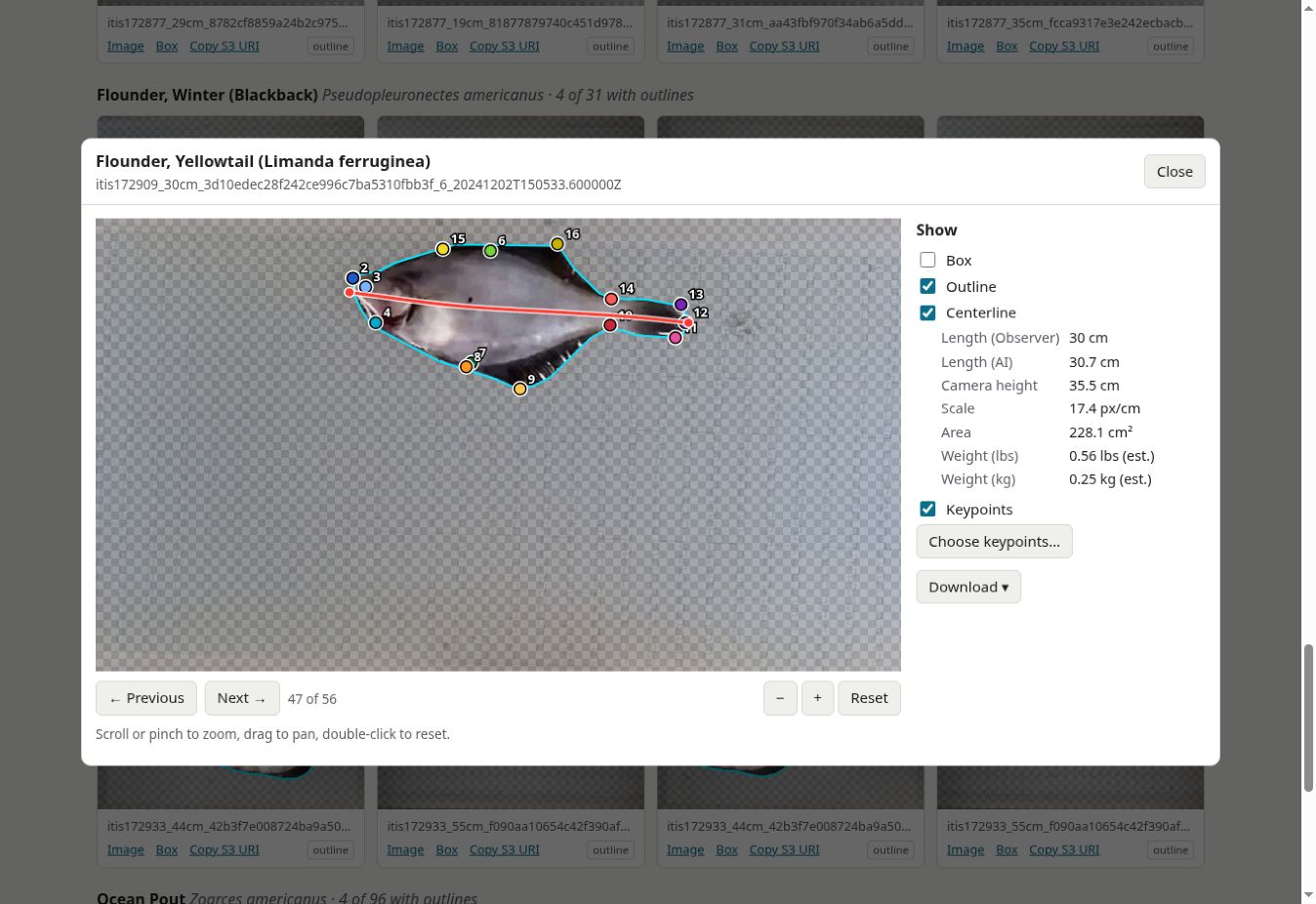
The interactive viewer shows a yellowtail flounder with anatomical landmarks, an outline, a centerline, and measurement information. Annotation availability varies across the collection. Credit: Open Groundfish Image Library / IM, A.I.S., Inc., and UMass Dartmouth/SMAST.
Connecting images to measurements
The library provides a practical setting for examining how fish measurements are derived from camera imagery. Its measurement tools use calibration metadata to account for camera geometry, lens distortion, and the fish’s height above the conveyor. They also accommodate differences between fork-length and total-length conventions.
Users can inspect outline-based length and surface-area estimates alongside available reference measurements. The viewer can also estimate weight using a novel approach based on fish’s projected area, allowing researchers to compare these results with estimates from length-weight relationship, such as NOAA’s species- and month-specific length–weight keys. Both methods infer weight from image-derived measurements rather than weighing fish directly. Access to the supporting images and calibration information enables independent evaluation and refinement of these approaches.
An invitation to the EM community
The aim of this release is to lower the effort required to begin fisheries computer-vision research and to encourage methods that can be examined, compared, and improved across the globe, especially those in the North Atlantic. The collection can support fish detection, segmentation, species identification, anatomical landmark estimation, and measurement research.
Because consecutive frames may depict the same fish, researchers should keep capture events together when dividing training and evaluation data. Testing on additional vessels and camera configurations remains important before applying a model in an operational EM program.
The library is released under GNU General Public License version 3 (GPLv3), with the license and notice available on the website. We welcome feedback on annotations, independent evaluations, and opportunities to collaborate on additional species and measurement methods.
Explore and download: Open Groundfish Image Library
Questions and collaboration: info@integratedmonitoring.net
Acknowledgments: The library was developed collaboratively by Integrated Monitoring, A.I.S., Inc., and UMass Dartmouth/SMAST, with funding from the National Fish and Wildlife Foundation and MIT Sea Grant. The partners thank NOAA Fisheries for its support, and the captains, crews, fisheries observers, and annotators who made the resource possible.
Related reading on EM4Fish
- Designing AI-assisted EM programs with Ai.Fish and TeemFish — Practical lessons on camera placement, catch handling and building useful datasets.
- OnDeck Fisheries AI: automated video search — An example of using AI to locate catch and discard events in monitoring footage.